


What Should You Do if Wastewater Backs Up Into a Basement?
Wastewater in your basement is a health hazard and a sign something has failed in your system. Here’s what to do, what not to do, and when to call for…


If you own a home on Long Island, there’s a reasonable chance your property sits on a cesspool rather than what most people picture when they hear the word septic system. The two terms get used interchangeably in casual conversation, but they describe genuinely different systems with different designs, different treatment capabilities, and in some cases, different regulatory obligations.
Understanding the distinction matters more now than it did a decade ago, because the regulatory and environmental landscape around Long Island’s older cesspools has changed significantly, and what you have underground increasingly determines what your options and obligations are.
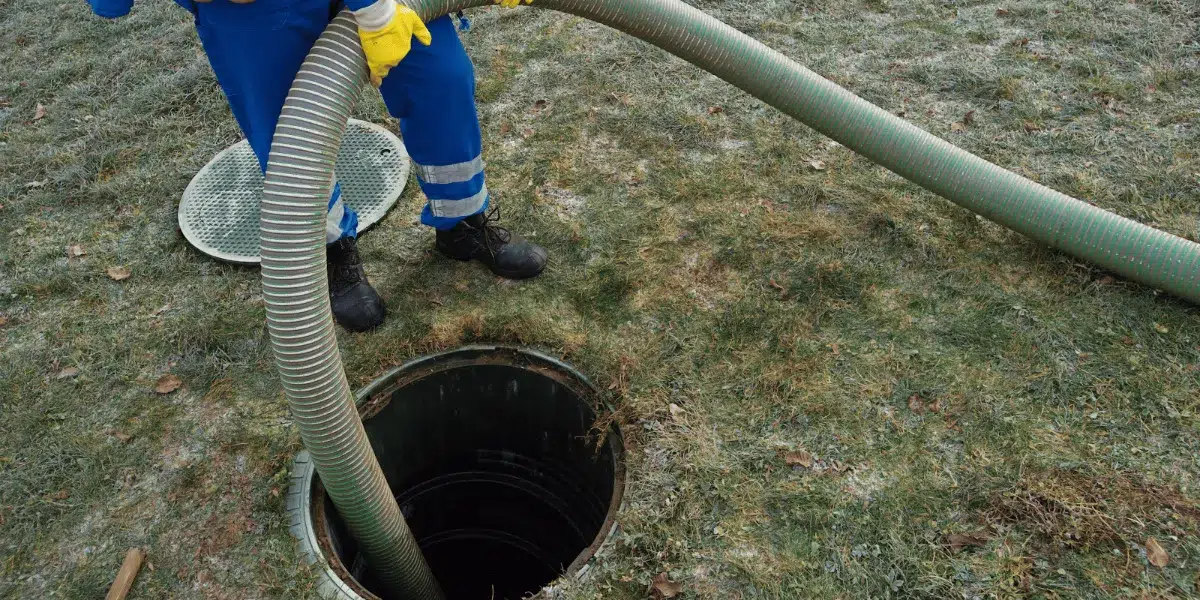
A cesspool is an underground pit, typically constructed of concrete blocks, brick, or precast concrete rings with an open or perforated bottom and sides. Wastewater from the house flows directly into this pit. Heavier solids settle at the bottom, and the liquid portion seeps outward through the perforations or gaps in the pit walls into the surrounding soil.
That’s essentially the entire process. There’s no separate treatment chamber, no distribution system, no engineered drain field. The cesspool relies entirely on the natural capacity of the surrounding soil to absorb the liquid and provide whatever filtration occurs through the soil profile.
Fun Fact: Cesspools have been the dominant residential wastewater solution on Long Island since before municipal sewer systems existed, and the Nassau County and Suffolk County Department of Health Services estimates that hundreds of thousands of older cesspools remain active throughout the island, many of them installed decades before modern wastewater treatment standards were established.
The simplicity of a cesspool’s design is both its appeal and its limitation. Installation is straightforward and inexpensive relative to more complex systems, but the treatment it provides is minimal. What goes into a cesspool is only partially processed before it reaches the groundwater, and on an island that relies entirely on its groundwater aquifer for drinking water, that has significant environmental implications.
A conventional septic system separates the treatment process into stages that a cesspool combines or skips entirely.
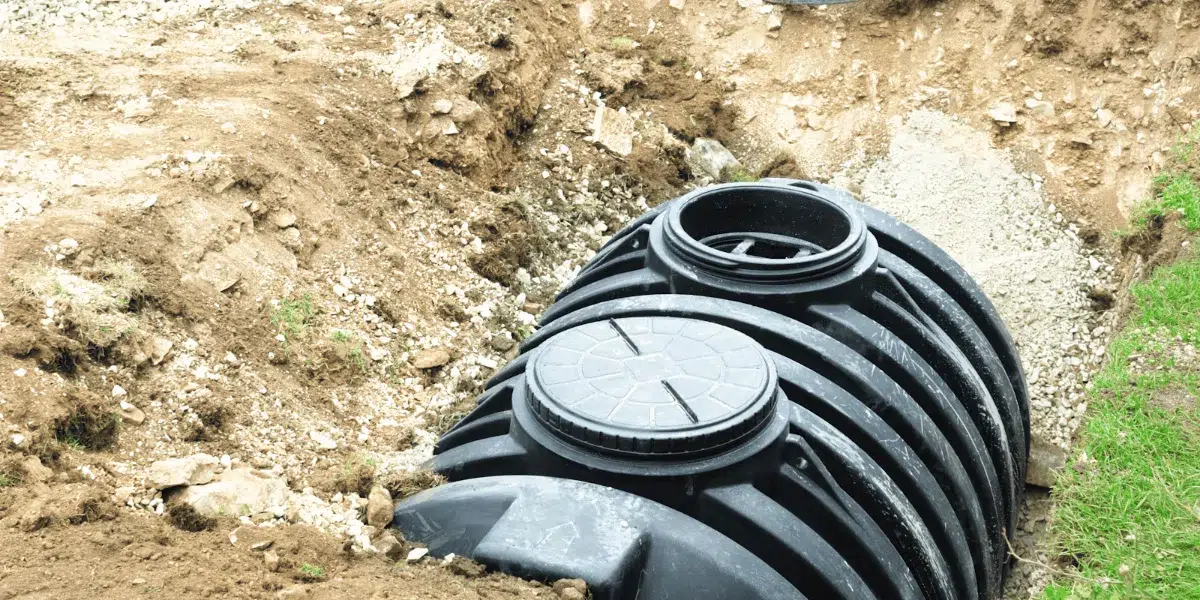
Wastewater from the house enters a sealed septic tank, typically made from precast concrete or fiberglass, where solids and liquids are separated. Heavier solids settle to the bottom as sludge, lighter material floats to the top as scum, and the partially clarified liquid in the middle, called effluent, flows out through an outlet baffle toward the second stage of treatment.
That second stage is the drain field, also called a leach field, which consists of perforated pipes buried in gravel-filled trenches. Effluent is distributed across these trenches and percolates downward through the soil, where additional treatment occurs as bacteria and natural filtration processes remove remaining contaminants before the water reaches groundwater.
Quick Fact: A properly functioning conventional septic system provides substantially more wastewater treatment than a cesspool because it separates solids before any liquid reaches the soil and then distributes that liquid across a designed drain field rather than concentrating it in a single pit, giving the soil more surface area and residence time to complete the treatment process.
The structural and functional differences between the two systems produce meaningful differences in how they perform and what they require.
| Factor | Cesspool | Conventional Septic System |
|---|---|---|
| Design | Single pit, open bottom/sides | Sealed tank plus separate drain field |
| Solids handling | Accumulate in the pit itself | Separated in sealed tank, removed by pumping |
| Effluent distribution | Through pit walls into adjacent soil | Through engineered drain field with distribution |
| Treatment level | Minimal, soil-dependent | Two-stage: tank separation plus drain field filtration |
| Nitrogen reduction | Very limited | Limited without advanced treatment components |
| Typical service interval | Every 1 to 3 years pumping | Every 3 to 5 years pumping |
| Failure mode | Pit walls clog, absorption fails | Tank fills, drain field saturates, components fail |
The nitrogen reduction row in that table is where the comparison becomes most relevant to Long Island’s current regulatory environment. Neither conventional cesspools nor standard septic systems remove meaningful amounts of nitrogen from wastewater before it reaches groundwater, which is why nitrogen-reducing advanced systems have become a focus of Long Island’s regulatory response to groundwater quality concerns.
Long Island’s relationship with its groundwater is unlike most of the country. The island sits on a sole-source aquifer, meaning there’s no backup water supply. Every well draws from the same connected groundwater system that receives the discharge from hundreds of thousands of onsite wastewater systems. The cumulative nitrogen load from those systems is one of the primary drivers of the groundwater quality, coastal water quality, and harmful algal bloom issues that have made Long Island’s wastewater infrastructure a significant policy focus over the past decade.
This is the context in which both existing cesspools and conventional septic systems are being evaluated against a different standard than the one they were installed under. An older cesspool that has functioned without visible problems for thirty years may still be entirely inadequate by current standards for what it’s releasing into the groundwater.
Fast Fact: Suffolk County has established geographic zones with different requirements for wastewater system upgrades based on proximity to surface water, groundwater sensitivity classifications, and nitrogen management priorities, which is why two properties a mile apart may have different obligations regarding when or whether a system upgrade is required.
The practical implications of having a cesspool versus a modern septic system, or an older conventional system versus an advanced treatment system, depend heavily on the specific property, its location within Suffolk or Nassau County, and the current requirements applicable to it.
Some properties in designated areas are subject to mandatory upgrade timelines. Some are eligible for grant funding that offsets the cost of installing a nitrogen-reducing system. Some are not currently required to do anything but would benefit from understanding what their system is, what condition it’s in, and what options exist. The right question to start with isn’t “does my property need an upgrade” but “what do I actually have, and what are the requirements and options that apply to my specific location.”
For homeowners whose cesspool is showing signs of performance problems, the repair-or-replace decision that often follows an assessment is covered in should you repair or replace your septic system.
For homeowners whose location puts them in a zone where nitrogen-reducing systems are either required or heavily incentivized, what is an I/A OWTS and why are Long Island homeowners installing them covers the advanced treatment systems that are the current direction of Long Island’s regulatory framework in detail.
Knowing whether you have a cesspool or a septic system, understanding what condition it’s in, and understanding what your applicable local requirements are is the starting point for any decision about maintenance, repair, or upgrade.
Rescue Cesspool & Drain provides thorough cesspool and septic services throughout Central Long Island and the surrounding communities, including system assessments that give homeowners the accurate information they need to understand their options.

